
Reviewed · SCUBA DIVING
Discover Scuba Diving
The best part of this St. Thomas experience is that you can try scuba without certification. You begin with basic instruction, get used to the equipment in shallow water, and then head into the sea with an instructor close by. It is a sensible first step for anyone curious about breathing underwater but not ready to commit to a full certification course.
I like two things especially: all equipment is supplied, and the instructors stay with you throughout the activity. Past participants have singled out Stephanie, Jack, Juan, and Danny for calm, patient teaching. The main consideration is that the exact underwater outing can vary. Some sessions use a shallow bay, with one participant reporting about 15 feet of water, while others may include a boat ride to reef or wreck sites.
Key points at a glance
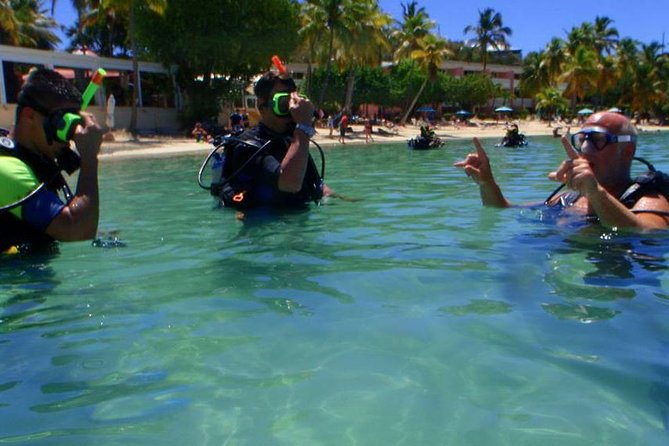
- A three-and-a-half-hour first lesson: You learn the basics, practice in shallow water, and then go into the sea under close supervision.
- No certification required: This is made for beginners who want to try scuba before taking a full course.
- Two possible settings: You may stay in a bay or travel by boat to two Caribbean Sea sites, depending on conditions and the day’s plan.
- Patient instruction matters here: Stephanie, Jack, Juan, and Danny are among the instructors praised for helping nervous beginners feel at ease.
- Wildlife can be close to shore: You may see fish, coral, sea anemones, and stingrays even during a shallow outing.
- Plan around your flight: Scuba within 24 hours of flying is not recommended, so schedule this carefully during your St. Thomas stay.
Learning scuba before you leave the beach
Aqua Action Dive Center keeps this first encounter with scuba fairly approachable. You are not expected to arrive with experience, and you do not need a certification card. The session is designed to introduce you to the basic skills and let you decide if you want to continue toward an Open Water certification later.
The day begins with classroom instruction. You receive a Discover Scuba booklet and learn how the equipment works, how to communicate underwater, and what to expect once you enter the water. This part may sound simple, but it is where many first-timers settle their nerves. Scuba gear looks technical at first, and a clear explanation makes the water portion much less intimidating.
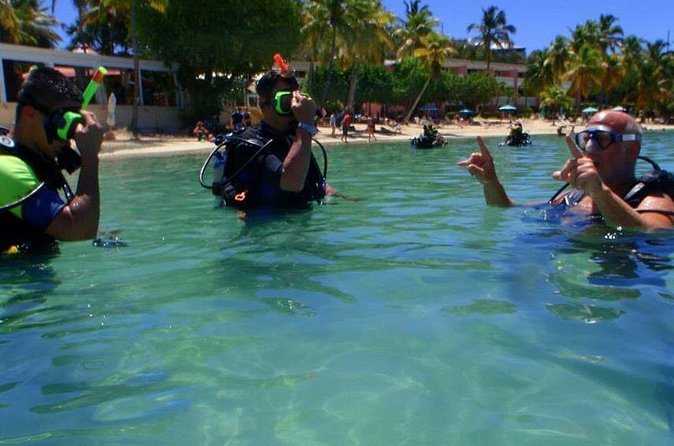
You then move into shallow water to practice. That gradual step is one of the strongest features of the activity. Instead of being placed straight into the sea and told to figure things out, you get time to adjust your mask, regulator, fins, buoyancy equipment, and wetsuit. An instructor stays nearby and can replace or adjust equipment if something feels wrong.
That personal attention is especially useful for anyone who feels uneasy about breathing through a regulator. One participant had trouble with gear at first, and the instructor changed the item causing the problem. This is a good reminder to speak up early. If your mask leaks or your regulator feels awkward, tell the instructor rather than trying to push through it.
More dive trips off St Thomas:
- Sea Trek Helmet Dive at Coral World Ocean Park
★ 5.0 · 992 reviews - Two-Tank Dive for Certified Diving in St Thomas
★ 5.0 · 456 reviews - Discover Scuba Diving with No Certification in St Thomas
★ 5.0 · 223 reviews
The shallow-water practice session
The shallow-water portion is not just a warm-up. It gives you a chance to learn how your body responds to the equipment before the outing becomes more open-ended. You can focus on breathing, hand signals, movement, and staying calm instead of worrying about seeing every possible fish.
The exact depth is not fixed. The activity can use a bay, and one account describes an outing at roughly 15 feet. That is quite shallow by scuba standards, but it has a real advantage for a first attempt: you are closer to the surface, the instructor can monitor you easily, and you can build confidence without feeling far from shore.
There is a tradeoff. If you already snorkel often, a shallow bay may feel less dramatic than you expected. One participant felt the marine life was similar to what could be seen while snorkeling. That is fair criticism, especially if your main goal is a deep reef or wreck setting.
Still, the value here is not only the depth. You are learning to use scuba equipment and control yourself underwater with an instructor beside you. For a first session, comfort and basic skill often matter more than reaching a particular number of feet.
What you might see underwater
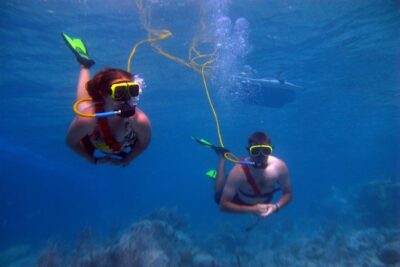
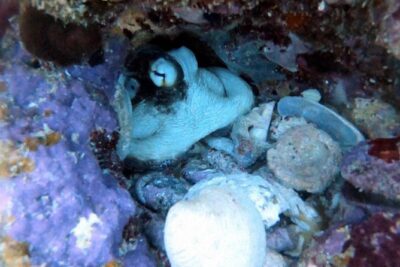
The marine life described for the bay includes fish, coral, sea anemones, and a notably large stingray resting on the bottom. Those are worthwhile sightings, particularly for a short introductory session close to shore. You may find that the shallow setting gives you more time to look around because you are not spending the whole outing managing nerves or handling a difficult descent.
The stingray is also a useful reminder to keep your hands to yourself and follow the instructor’s directions. The purpose is to watch the underwater world without disturbing it. Your guide can help you understand where to look and how to move calmly around marine life.
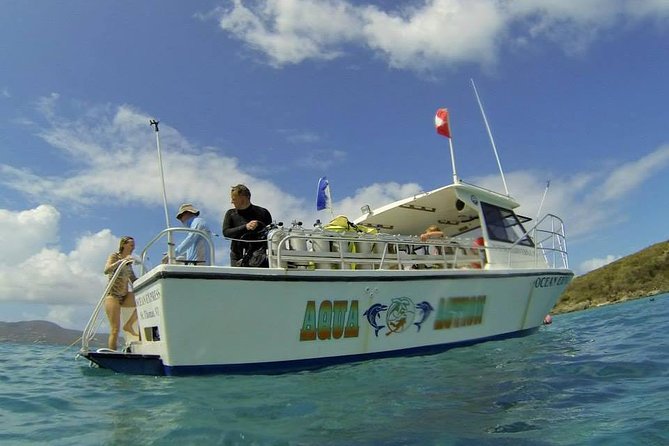
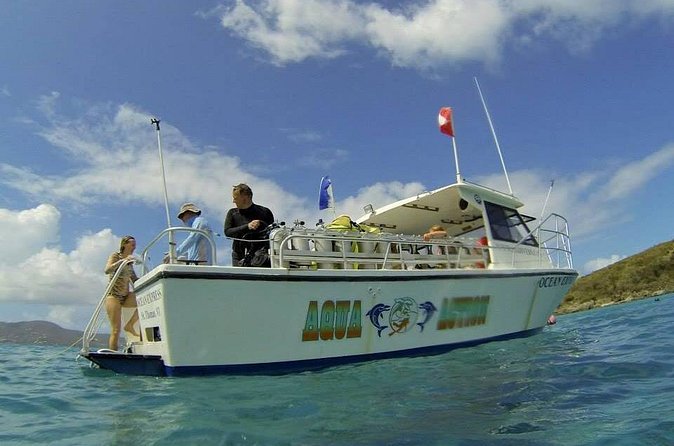
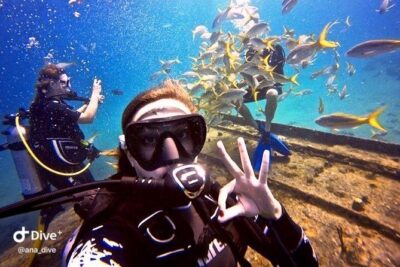
The boat option offers a different type of outing. When conditions and scheduling allow, you may travel to two Caribbean Sea locations, with reefs and wrecks mentioned as possible sites. These locations may feel more like the classic Caribbean scuba experience, but the description does not promise a particular reef, wreck, depth, or animal sighting. I would book this for the instruction first and treat the boat sites as a welcome possibility rather than a guarantee.
Weather plays a role too. The activity requires suitable conditions, and an outing can be moved or refunded if poor weather forces cancellation. That policy is reassuring, but it also means you should avoid placing this activity on the final morning of a short holiday.
How the three-and-a-half-hour schedule works
The full session lasts about three hours and 30 minutes. That gives you enough time for instruction, equipment preparation, shallow-water practice, and the main underwater outing without turning the activity into an all-day commitment.
The classroom stage comes first. Bring your attention here, even if you are eager to get into the water. Understanding the basic procedures will help you enjoy the marine life later, and you will be better prepared to respond to hand signals or equipment concerns.
Next comes equipment fitting and shallow-water practice. The supplied package includes tanks, weights, a buoyancy control device, regulator, wetsuit, fins, mask, and snorkel. You do not have to assemble a personal kit for this introduction. The instructor can also help if a particular item does not fit or work well.
The final portion is the sea outing. Depending on the plan, you might enter from a beach or bay, or board a boat for two sites. At the end, you return to the meeting point in St. Thomas. Since the activity is short enough to fit into a half-day, you can still leave room for a beach visit or another island activity, though I would not schedule anything demanding immediately afterward.
A few more St Thomas trips worth comparing
- Turtle Cove Catamaran Snorkel and Sail at Little Buck Island STT
★ 5.0 · 2,100 reviews - Snorkel St. John Tour from Sapphire and Margaritaville
★ 5.0 · 1,874 reviews - Night Kayak Tour St. Thomas – Westin Frenchman’s Reef
★ 5.0 · 1,813 reviews - Tree Limin’ Extreme Zipline
★ 5.0 · 1,713 reviews
The instructors are the key part of the value
For a beginner, the instructor can make or break the session. The strongest pattern here is calm, patient help. Jack is described as clear and patient, with close attention to first-time procedures. Stephanie is praised for being attentive in the water and for helping a nervous participant become comfortable. Juan and Danny are also noted for staying patient and checking that the participant was doing well at each step.
These details matter more than flashy promises. A first scuba session can feel strange. Your face is covered, your breathing sounds different, and the equipment changes how you move. An instructor who stays close and explains things plainly gives you room to learn instead of making you feel rushed.
The group size is capped at 12 people. That is not the same as a private lesson, and the actual instructor-to-participant ratio is not specified. Still, the maximum keeps the session from becoming an enormous crowd. If you need extra help, say so at the start. The supplied accounts suggest that the staff are used to helping beginners with gear and nerves.
The activity has a strong rating, with 98 percent recommended and 43 five-star ratings listed. Those numbers point to consistent satisfaction, especially with the staff and the beginner-friendly teaching. They do not remove the shallow-water limitation, so match your expectations to the type of activity you are booking.
Is $175 a fair price?
The price is $175 per person. That is not a small add-on for a beach holiday, but it includes the booklet, all scuba equipment, tanks, weights, wetsuit, mask, fins, snorkel, and a qualified instructor.
I see the price as fair if you are paying for a first lesson rather than only for sightseeing. A snorkel outing may show you some of the same shallow-water animals for less money. It will not teach you how to use a regulator, manage scuba equipment, or decide if full certification is right for you.
The value improves if you are genuinely curious about scuba and want a supported introduction. It is less convincing if you only want to see a particular wreck or reach substantial depth. For that goal, ask about the boat option and the likely site before booking, because the bay format may be much shallower than you expect.
Gratuity is not included. A tip of 15 to 20 percent of the tour cost is recommended, so factor that into your budget. At the listed price, that means roughly $26 to $35 per person if you choose to follow the recommendation.
Who should book this St. Thomas activity?
This suits a first-time scuba participant with a moderate level of fitness. You should be comfortable getting into the water, wearing a wetsuit, and following instructions for several hours. You do not need previous scuba training, but you do need to complete a health questionnaire before entering the water.
Medical conditions can affect eligibility. Asthma, heart conditions, and other pre-existing issues may prevent you from scuba, so consult your doctor before booking if you have a concern. This is not a detail to leave until the morning of the activity.
Families and small groups can also find this format appealing. One outing included three people, and another involved a parent and sons trying scuba together. The shared experience can be memorable, but every participant still needs to feel comfortable in the water and complete the health requirements.
I would be more cautious about booking this for someone who dislikes close instruction, feels strongly about reaching depth, or wants a guaranteed wreck visit. The program is built around learning and supervision, not a fast route to advanced scuba.
Practical timing and cancellation advice
Do not schedule this within 24 hours of flying. Scuba near a flight is not recommended, so place the activity early or in the middle of your St. Thomas stay, leaving a safe gap before departure.
Confirmation is provided when you book, and the activity begins and ends at the St. Thomas meeting point. The location is near public transportation. The description does not provide a hotel pickup service, so make sure you understand the meeting point before setting out.
Free cancellation is available until at least 24 hours before the local start time. Changes or cancellations inside that window are not refunded. Poor weather or failure to reach the minimum number of participants can also cancel the session, in which case you are offered another date or experience, or a full refund.
Because weather can affect the boat and water conditions, I would keep a little flexibility in your schedule. That way, a change does not cost you the only day you had available.
My recommendation for your booking decision
Book this if you want a careful first taste of scuba, value patient instruction, and are happy with either a shallow bay or a possible boat outing. The supplied equipment and close supervision make it easy to try the activity without first buying gear or completing a full certification course.
Think twice if your main goal is a guaranteed deep reef, wreck, or dramatic offshore setting. Some sessions may remain close to shore at about 15 feet, and snorkeling could show you similar marine life. For everyone else, the combination of a short schedule, supportive instructors, and a real chance to see coral, fish, sea anemones, and perhaps a stingray makes this a practical introduction.
FAQ
Do I need scuba certification to join?
No. This is an introductory scuba activity for beginners and does not require certification.
How long does the activity last?
The session lasts approximately three hours and 30 minutes.
What does the session include?
It includes a Discover Scuba booklet, scuba equipment, tanks, weights, a buoyancy control device, regulator, wetsuit, fins, mask, snorkel, and a qualified instructor.
Will an instructor stay with me?
Yes. The activity is conducted under supervision, with an instructor by your side throughout the session.
Where does the underwater outing take place?
It may take place in a shallow bay, or you may travel by boat to two Caribbean Sea locations. The exact setting can vary.
How deep will I go?
The depth is not fixed. One described bay outing reached about 15 feet, while the boat option may visit reef or wreck locations. A specific depth is not guaranteed.
What marine life might I see?
You might see fish, coral, sea anemones, and stingrays. Sightings are not guaranteed.
Can I participate if I have asthma or a heart condition?
Some medical conditions, including asthma and heart conditions, may prevent participation. You must complete a health questionnaire, and you should consult your doctor about any concern before booking.
Can I scuba within 24 hours of flying?
Scuba within 24 hours of flying is not recommended. Schedule the activity with enough time before your flight.
What happens if weather cancels the activity?
If poor weather cancels the activity, you can choose another date or experience, or receive a full refund. The same options apply if the minimum number of participants is not reached.
Recently added around St Thomas
- Sightseeing and Swimming Excursion★ 4.5 · 9 reviews
- Reef and Turtle Adventure – Kayak and Snorkel Tour★ 5.0 · 15 reviews
- Vi Top Taxi – St. Thomas Airport Transfer to Wyndham Margaritaville★ 5.0 · 26 reviews
- Vi Top Taxi &Tours – Airport Transfer to the Ritz Carlton★ 5.0 · 31 reviews
- 1.5 Hour Private Mini Jeep Tour on St. Thomas★ 5.0 · 31 reviews
- 6 Hour St. Thomas Private Sightseeing Tour★ 4.5 · 23 reviews
- Turtle Snorkel Sail on Buck Island from Frenchman’s Reef★ 4.0 · 8 reviews
- Guided Tour of Coral World Ocean Park & Happy Hour★ 4.5 · 6 reviews
Scuba Diving, compared.
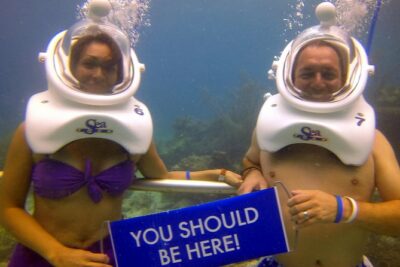
Sea Trek Helmet Dive at Coral World Ocean Park
Read our review →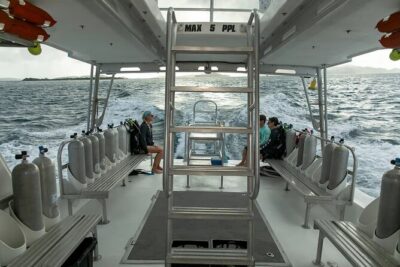
Two-Tank Morning Dive Trip for Certified Divers
Read our review →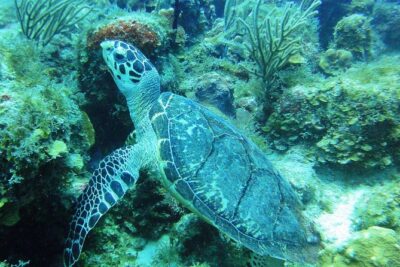
Two-Tank Dive for Certified Diving in St Thomas
Read our review →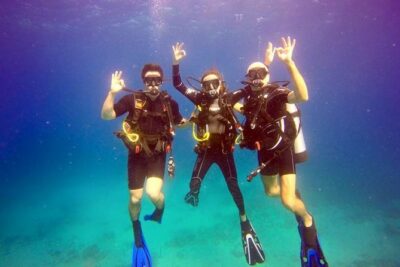
Discover Scuba Diving with No Certification in St Thomas
Read our review →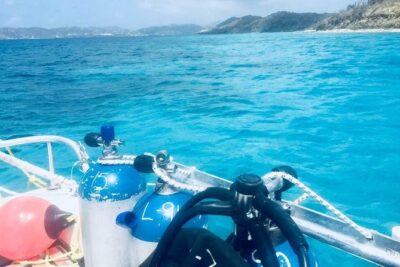
Private Full Day Guided Snorkeling or Diving Charter in St Thomas
Read our review →Browse the lists this tour appears in